
Trace a North Olmsted Street
Start the North Olmsted street directory process with the physical address, not a name. The county parcel record gives the most stable bridge from a house number to the Permanent Parcel Number, or PPN. From there, the PPN and legal description point to the recorded-document trail. This approach keeps a street search grounded when a property has a different tax-mailing address, when an owner is an entity, or when an older deed uses a subdivision description instead of a modern street number.
- In Cuyahoga County MyPlace, select City = North Olmsted and Search By = Address. Save the situs address, PPN, recorded owner, legal description, and any transfer lead shown on the parcel card.
- Open View Map or Go To Full Map and inspect the parcel itself. Check nearby parcels one by one if the question concerns a stretch of street.
- Use the PPN, legal description, or recorded owner in the Cuyahoga Official Records Search to find the acquisition document and its grantor.
- Move backward through the deed chain by treating that grantor as the prior owner, then repeat with the deed's document number, subdivision terms, or parcel identifier.
- For a current registration question, use Ohio's person-oriented voter tool or ask the Board of Elections for an existing lawful record. It is not a public street-by-street roster.
The result is an address record trail. It can identify a recorded owner or document party, but it cannot establish every current household member. For older household clues, a dated reverse or criss-cross directory can be useful when the relevant volume is available.
North Olmsted Street Address Evidence
North Olmsted is a city within Cuyahoga County, so the strongest street records usually sit in county systems. The city adds address-based permit, inspection, citation, and maintenance-history material. That division matters. A City file may document work at a property, while MyPlace links the address to a parcel and the recorder preserves the formal document trail. Neither source is a complete directory of occupants.
North Olmsted's official city website is the starting point for municipal departments and current city contacts.
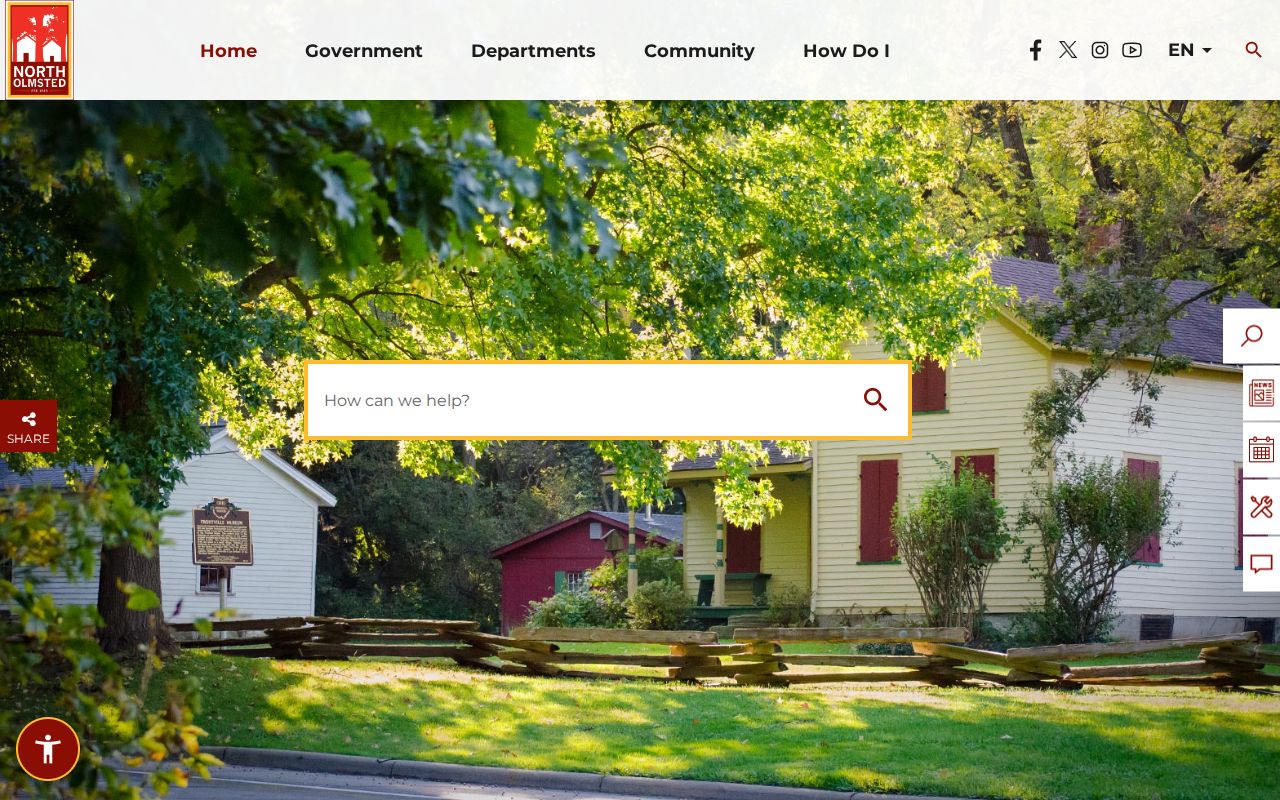
Use the city contact route to identify the department that keeps the address-specific record before making a request.
County records supply the longer chain. The Fiscal Office's Transfer & Recording division maintains recorded property interests, tax maps, plats, and parcel creation. The Recorder's stated coverage reaches from 1810 to the present, while the County Archives is the appointment-based fallback when a historic property question extends beyond a practical online search.
MyPlace for North Olmsted Streets
MyPlace is the primary working tool for a North Olmsted street directory search. Its City control narrows the municipality, and its required Search By control offers Owner, Parcel, and Address. Use Address when the street location is known. Use Parcel after a PPN has been saved. Use Owner only to investigate a recorded-owner lead, not to assume residency. Search Results can lead to View Map, and the parcel card includes General Information, Transfers, Values, Land, Building Information, Building Sketch, Other Improvements, Permits, Property Summary Report, and Tax By Year.
| MyPlace field | Control | Use in a street search | What to keep separate |
|---|---|---|---|
| City | Dropdown | Select North Olmsted to narrow the municipality. | City selection is not a ZIP or precinct filter. |
| Search By | Selector | Choose Owner, Parcel, or Address. | Owner is a property clue, not every occupant. |
| Search | Text field | Enter the selected address, PPN, or name. | Retain the search mode with the result. |
| Search Results / View Map | Button and tab | Open the parcel list and place a result on the map. | Map display is informational. |
| Parcel tabs | Tab list | Check transfers, permits, tax years, and physical-property modules. | The originating office remains the official record. |
Cuyahoga County's tax lookup guidance shows the property search route used for current and prior tax information.
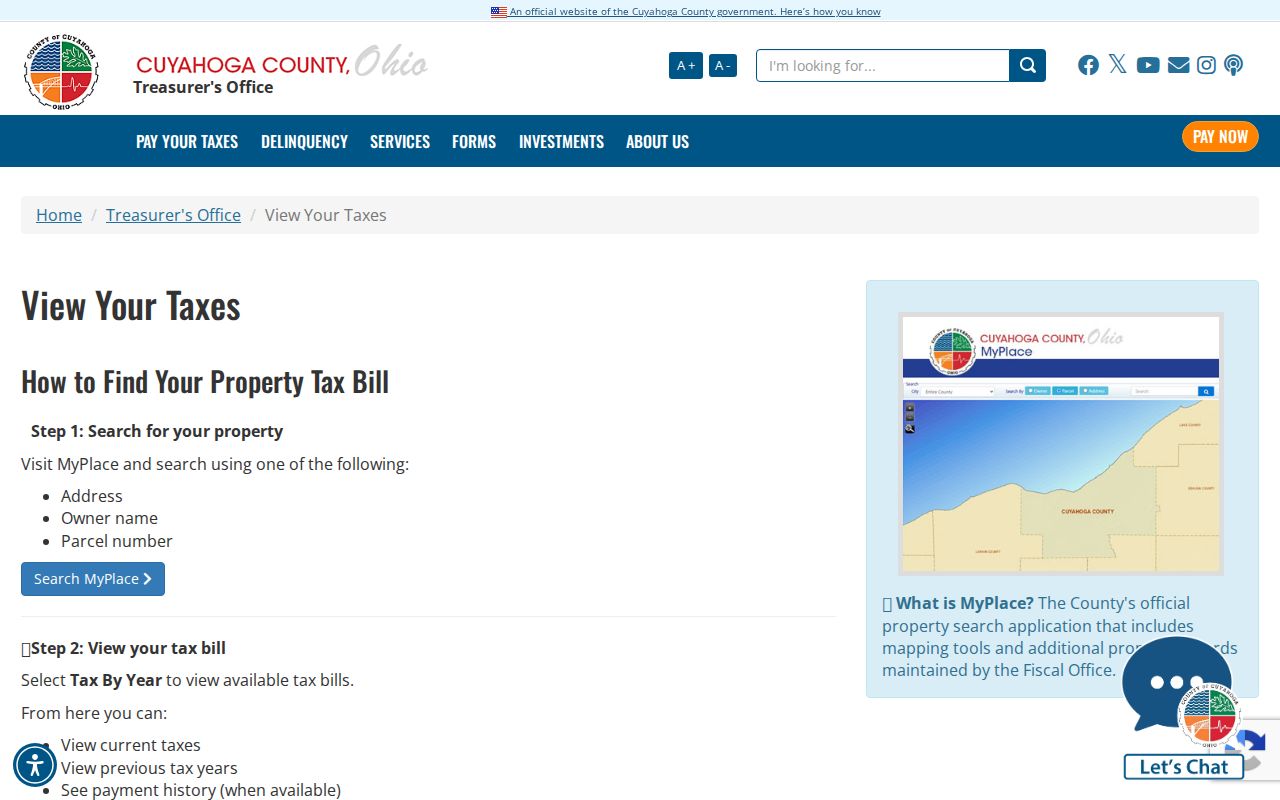
Tax and transfer modules add dated parcel context, but a tax flag or mailing address should not be turned into a claim about who presently occupies the property.
North Olmsted Street Record Keys
A North Olmsted street search becomes more reliable when each label is read for its own purpose. The same parcel can have a physical address, a tax correspondence address, a PPN, and a legal description. The latter two are often the durable links when a street label or numbering convention changes in older material.
- Parcel or PPN
- The Permanent Parcel Number is the county identifier assigned to a lot. It connects MyPlace, tax maps, and recorder research more reliably than a name alone.
- Situs address
- The physical street location of the parcel. Use it for map, permit, and address-based record requests.
- Mailing address
- The place where county correspondence is sent. It can differ from the situs and does not prove residence at either location.
- Legal description
- The lot, subdivision, or metes description used in deeds and plats. It helps preserve continuity across changing address text.
- Criss-cross directory
- An address-to-name directory format. A dated issue can provide a historic clue, not proof of a current household.
North Olmsted Street Records
Several records can be keyed to the same North Olmsted address, but they answer different questions. The coverage below separates parcel ownership from city work files, archival property material, and voter records. It also keeps the street directory useful without overpromising a public list of residents.
| Address record | Local keeper | What it can show | Access route |
|---|---|---|---|
| MyPlace parcel card | Cuyahoga Fiscal Office | Recorded owner, PPN, situs, legal, transfer, land, building, permit, and tax modules. | Free City, Owner, Parcel, or Address search. |
| Recorded documents | Transfer & Recording | Grantor, grantee, document/date/number, PPN, and legal-description leads. | Online index or recorder counter. |
| Maps, plats, and tax records | Fiscal Office and County Archives | Parcel development, tax-era, and subdivision context. | MyPlace/Map Room or Archives appointment. |
| City building files | North Olmsted Building Department | Permit, inspection, citation, and work-history clues. | Phone, email, public-records request, or inspection. |
| Voter material | Cuyahoga Board of Elections | Lawful registration evidence subject to statutory limits. | Person lookup or request for an existing public record. |
The PPN is the main bridge across these systems. A street name alone may be secondary in a deed index, while the legal description and parcel number can lead directly to the right document trail.
North Olmsted Street Deed Chain
For a North Olmsted street directory inquiry about ownership over time, start with the parcel card and then shift to the recorder. Official Records Search accepts grantor or grantee terms, subdivision text, document type, document number, and Parcel ID. Its quick search also offers recorded-date ranges and Index Only or Index & Full Text (OCR) scope. Index Only searches multiple words individually. The OCR option searches multiple words as a phrase. Add a date range after a broad result rather than guessing at a document type.
The practical chain is current owner or PPN from MyPlace, acquisition deed in the recorder index, seller or grantor from that deed, then the earlier acquisition. The county says its recorded-document data runs from 1810 to present. That is not a promise that every historic image will behave the same way online. If an older result is unclear, retain the PPN and legal description, then use the recorder counter or County Archives property research.
Cuyahoga County's Recorded Documents overview explains the office's recorded-property resources.
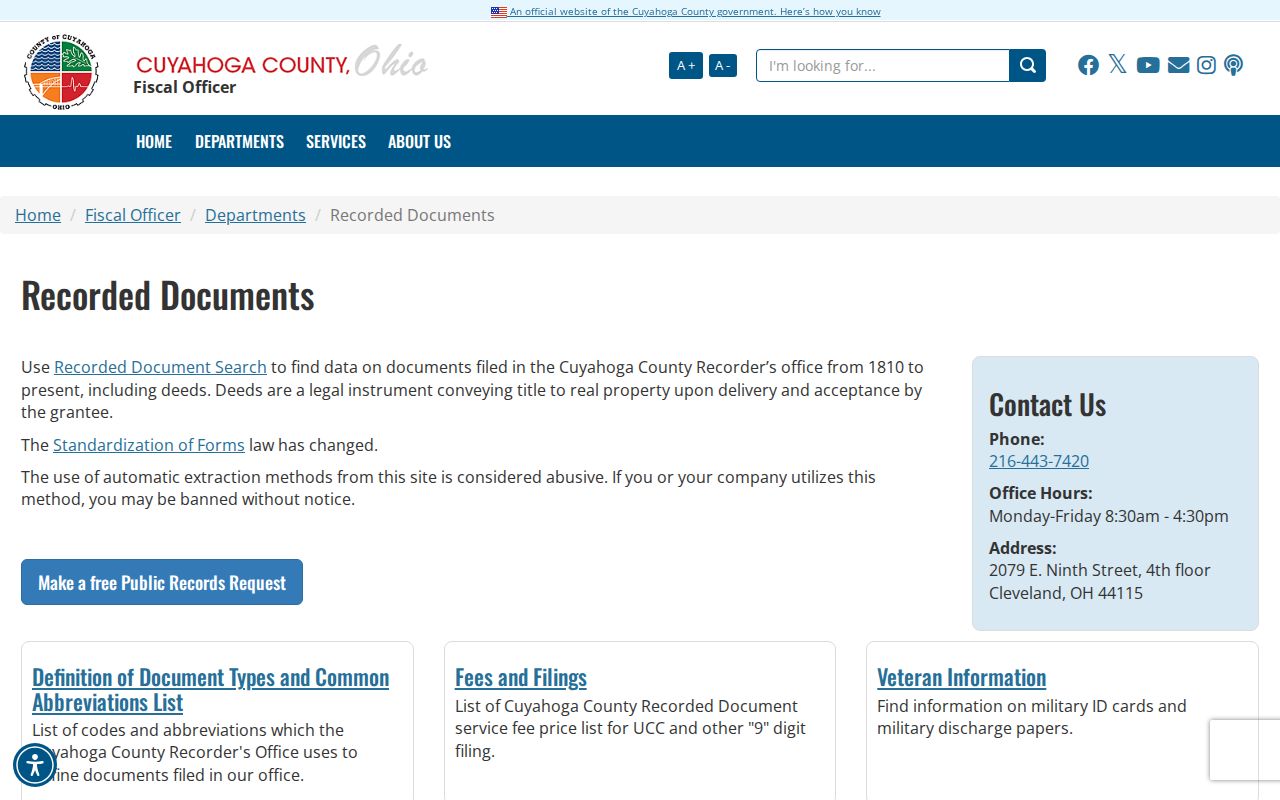
The index is a route to recorded evidence. Confirm an important ownership fact with the originating office or the applicable document image.
Transfer & Recording's county page identifies the office that maintains the county's property-recording functions.
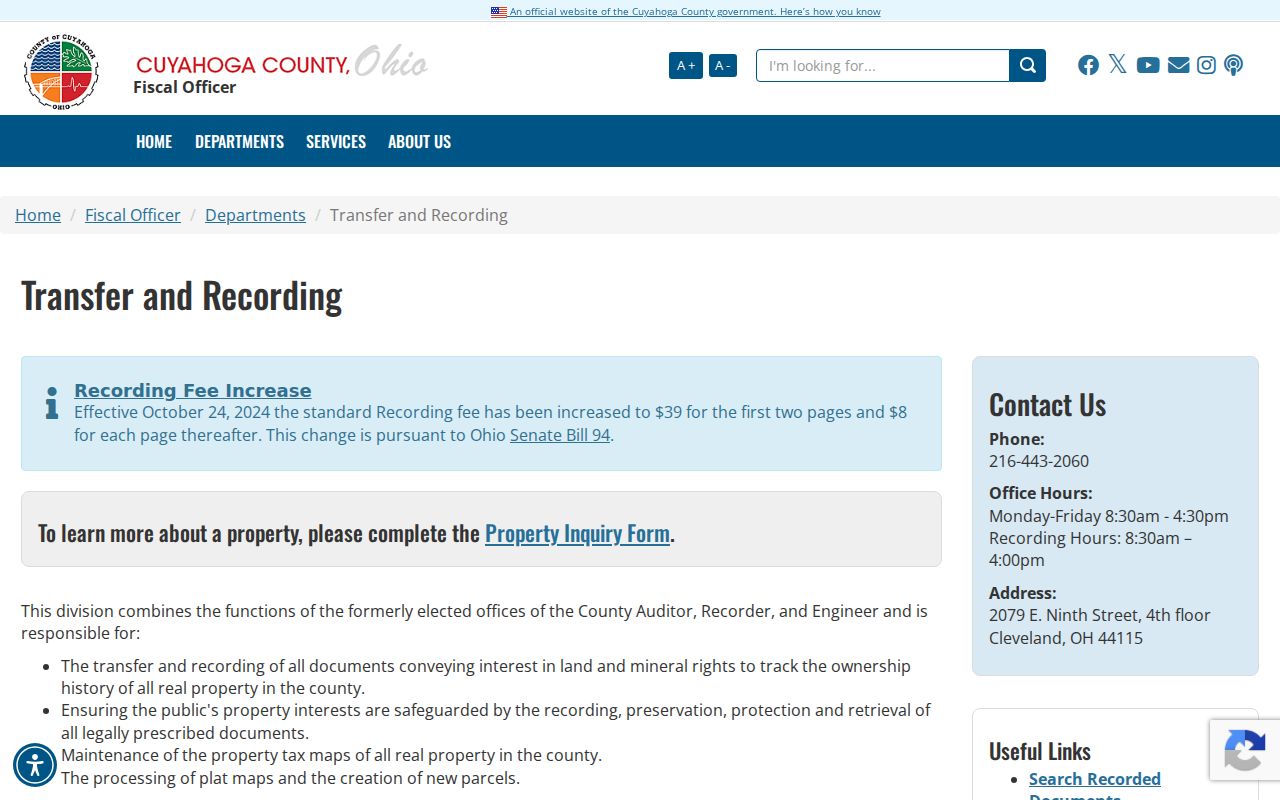
When an older address does not match a modern search, a subdivision or legal-description term is often a better recorder key than the current house number.
North Olmsted Street City Files
The Building Department is the city channel for street-specific work history. The city says it maintains records on most improvements and work, property-maintenance history, permits, citations, and inspections. Those records can provide context around construction or a maintenance issue, yet they may name an owner, contractor, or applicant rather than a resident. North Olmsted has no verified public online building-permit or code-case search, so do not expect to complete this part of a street directory search through a city portal.
Ask for the street address, PPN if known, approximate period, and the particular record type. The published Building Department contact is 440-777-8000 and NOBuilding@North-Olmsted.com. A city public-records request and inspection under the Ohio Public Records Act are additional channels. The City also states that it has no point-of-sale inspection requirement, so a missing inspection record does not prove that no work took place.
North Olmsted's public-records service page is the written-request route for city material.
A concise request for an existing address file is more useful than asking the City to create a household list that it does not maintain.
North Olmsted Street Report Scope
The North Olmsted Police report page has a limited street-name search that can retrieve recent public incident or accident reports in PDF form. Its visible modes include report number with an Accident or Incident choice, report date, street name, and last name for accident reports only. That makes it an address-related public-record tool, not a street directory of people and not evidence of current residence.
A no-result is not proof that an event never occurred. It can reflect the page's scope, a date issue, a restricted or redacted record, or the limits of what the public interface displays. Use the city records procedure to ask the police records unit about an existing releasable record when the public search does not answer the request.
North Olmsted Police public report search shows the available street-name retrieval option.
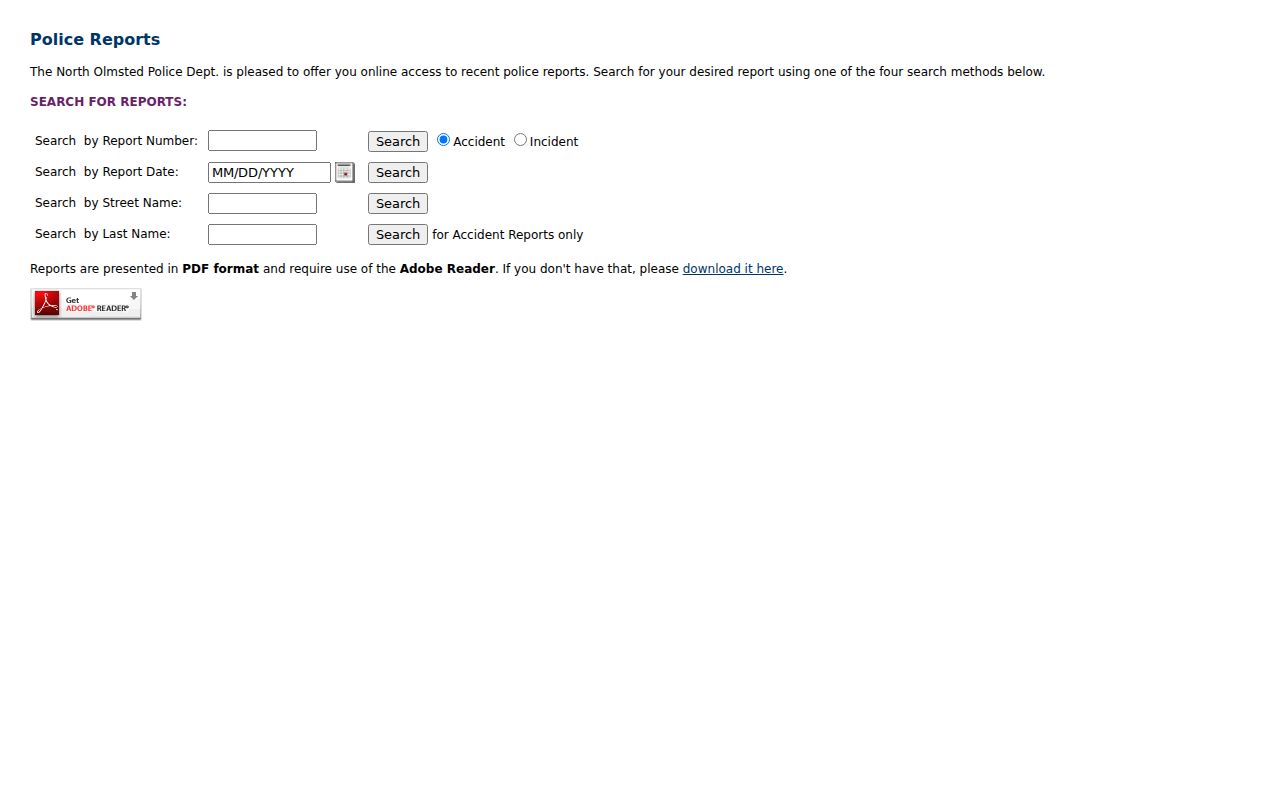
Read a returned report for its stated date and incident context, then verify any related property fact through the proper custodian.
North Olmsted Street Geography
North Olmsted street research crosses several geographic systems. A 44070 mailing label is postal geography. A PPN identifies a county parcel. A tax district, school district, municipal line, and election precinct answer their own separate questions. Use the parcel's situs and PPN when making a property request, and use a precinct or Board of Elections source for election geography. Do not turn a ZIP label into proof of city jurisdiction or precinct coverage.
North Olmsted's city code also requires legible building numbers visible from the street. That practical address rule helps normalize a house number found in a permit request, police report, historic directory, or parcel search. It does not create a citywide resident roster. For a historic address, cite the printed directory year and publisher, then confirm the parcel with the map and legal-description trail. The historical volumes themselves are handled through the North Olmsted Directory Book.
Limits of North Olmsted Streets
A street directory can point to public property and document records, but it cannot reveal every person at an address. MyPlace reports recorded ownership and parcel facts, not a complete household. A mailing address may be outside the city. Utility customer information and motor-vehicle personal data are not public street sources. Ohio's voter system is person-oriented, and no verified public browse-by-street voter tool exists. Safe at Home participation, statutory address redaction, sealed court material, and protected voter records can also lawfully limit a result.
When a record seems incomplete, accept the privacy boundary and verify the available public fact with its custodian. A careful street-by-street search separates recorded ownership, public address context, and protected personal information.