
North Olmsted Historical Directory Holdings
North Olmsted historical directory holdings survive as a patchwork of regional titles, library microfilm, and supporting county collections. The most specific starting point is a four-community volume, followed by two confirmed entries in a neighboring title and then a later suburban microfilm run. Cleveland Public Library's directory guide identifies the titles, while Cuyahoga County Archives supplies broader directory and property context. Treat each entry as evidence from one printed issue, not as proof that every North Olmsted household appeared in every year.
| Collection | Years | Where Held | Access |
|---|---|---|---|
| Fairview Park, Parkview, North Olmsted, Westlake Directory | September 1953, Orange Line Publishing Co. | Cleveland Public Library Center for Local and Global History | Consult the directory item or microfilm as a four-community source. |
| Lakewood City Directory | North Olmsted confirmed in 1962 and 1963 | Cleveland Public Library guide and collection | Use the confirmed issues for North Olmsted names and addresses. |
| Cleveland West Suburban directories | 1964-1980 | Cleveland Public Library History Department microfilm | Request the relevant volume and verify North Olmsted coverage issue by issue. |
| Cleveland City Directories | 1837-1972, not inclusive | Cuyahoga County Archives | Use for regional move or business clues, not as a complete North Olmsted run. |
The gaps matter. The 1953 Orange Line title is not a standalone annual North Olmsted publication. Likewise, the West Suburban years identify a microfilm run, not a promise that each reel includes the city. Record the title page, publisher, volume date, page, and spelling each time a North Olmsted volume supplies a clue.
North Olmsted's 1953 Directory Book
The September 1953 Fairview Park, Parkview, North Olmsted, Westlake Directory is the first named local item confirmed by the library guide. Orange Line Publishing Co. issued it for four communities, which is useful geography as well as a catalog fact. A surname absent from the North Olmsted portion could appear under a nearby community if the household moved, used another business address, or fell within the volume's wider service area. Copy the title as printed when making a family-history note.
Cuyahoga County Public Library's North Olmsted Branch is a local access point for genealogy assistance and library resources.
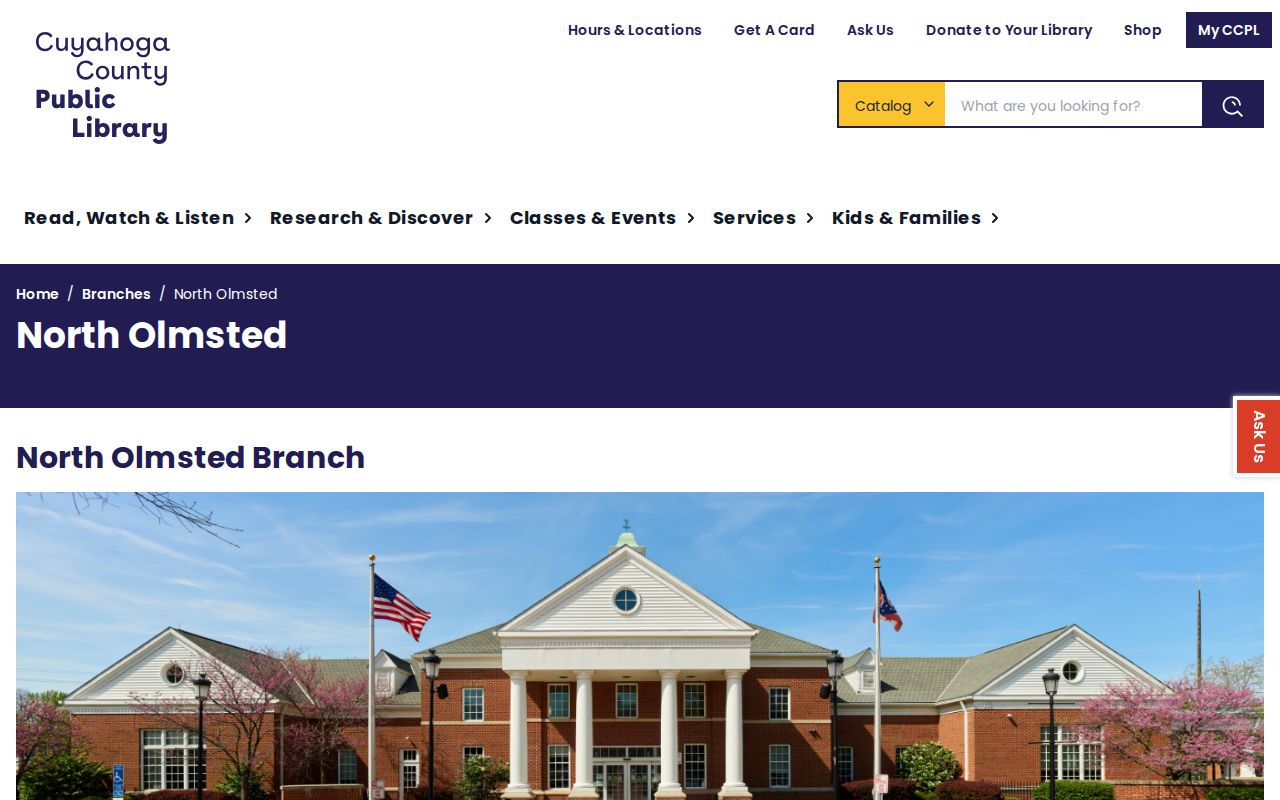
The branch is not presented as the documented holder of the Cleveland Public Library directory microfilm, but it gives North Olmsted researchers a nearby place to ask about access and pair a directory clue with library databases.
Note: A four-community title requires a careful place check before attaching a listing to a North Olmsted address.
North Olmsted Directory Years Need Checking
The Lakewood City Directory is valuable because the Cleveland Public Library guide confirms North Olmsted inclusion only for 1962 and 1963 in the documented run. Earlier volumes listed nearby west suburbs, but the research does not establish North Olmsted inclusion before those two editions. The later Cleveland West Suburban directories cover 1964 through 1980 on complete microfilm sets held by the library's History Department. Open the relevant reel before claiming that a particular year contains North Olmsted.
That volume-by-volume method prevents a common error in historical work: turning a collection date range into an invented annual series. Search a surname in the known 1953, 1962, and 1963 anchors first. Then identify a later West Suburban issue that actually lists the place. If an address changes, preserve both the printed address and the date rather than normalizing it to a current parcel too soon.
North Olmsted Directory Geography
Place names require the same care as years. North Olmsted is a Cuyahoga County city, but older directory titles may join it with Fairview Park, Parkview, Westlake, or other west-side places. Do not merge it with Olmsted Township, Olmsted Falls, or a nearby community merely because a surname or postal label looks familiar. The 1953 four-community directory is a useful reminder that a regional title does not erase municipal differences.
For a property question, a current MyPlace city selection and a Permanent Parcel Number can help test whether a historic street reference belongs to the same North Olmsted parcel. The city boundary, 44070 postal label, tax district, school district, and parcel identifier serve different purposes. A city-directory address is the historical clue; the legal description and county record trail determine whether it can be carried forward to a present property.
North Olmsted Directory Research Routes
Cleveland Public Library's Center for Local and Global History is the documented directory-collection route. Cuyahoga County Public Library adds a different layer: HeritageQuest, Ancestry Library Edition for in-library use, Fold3, Heritage Hub obituary searching, and searchable Sanborn Fire Insurance Maps. The North Olmsted Branch can connect a local researcher with those CCPL resources, while an actual directory microfilm question belongs with the Cleveland Public Library collection identified in its guide.
CCPL genealogy resources provide census, obituary, map, and local-history support around a directory result.
These resources are companions, not substitutes for the printed issue. A census can supply household detail, while an obituary or map may explain a move, a death, or a street context recorded by a North Olmsted volume.
Read a North Olmsted City Directory Entry
A historical entry should be transcribed, not paraphrased. The local entry image was not available during research, so the safest inventory is limited to fields documented for the city-directory collection and to marks verified on the specific page in hand. Compare initials, full names, spelling variants, and the street number across nearby issues. A directory can offer a strong lead, but it does not establish a modern address or identify every member of a household.
| Personal name | Copy the surname-led form, initials, and every spelling variant exactly as printed. |
|---|---|
| Street address | Keep the number and street form together for later map, parcel, and census comparison. |
| Work or business clue | FamilySearch identifies occupation and address as common facts in its directory collection. |
| Spouse or widow notation | Confirm any such notation in the specific volume before treating it as a local column or abbreviation. |
| Owner or renter mark | Do not assume a mark exists until the issue's abbreviation key has been read. |
- Criss-cross directory
- An address-ordered directory format used to work from a street number toward a printed name, unlike the usual alphabetical listing.
- Householder index
- An index organized around the named household contact. It is not proof that no other people lived there.
- Abbreviation key
- The volume's explanation of its short forms and symbols. Photograph or transcribe it before interpreting a mark.
North Olmsted Directory Clues at County Archives
When the city-directory shelf ends, Cuyahoga County Archives can extend the question through historical record groups. Its holdings include Cleveland directories from 1837 to 1972, though not inclusively, along with List of Electors from 1893 to 1982, an Index to Naturalized Voters, estate indexes, marriage material, biographical clipping files, tax records, maps, and property cards. These are context sources, not a hidden all-years North Olmsted directory.
Cuyahoga County Archives' holdings guidance describes the record groups and the appointment or research-request route.
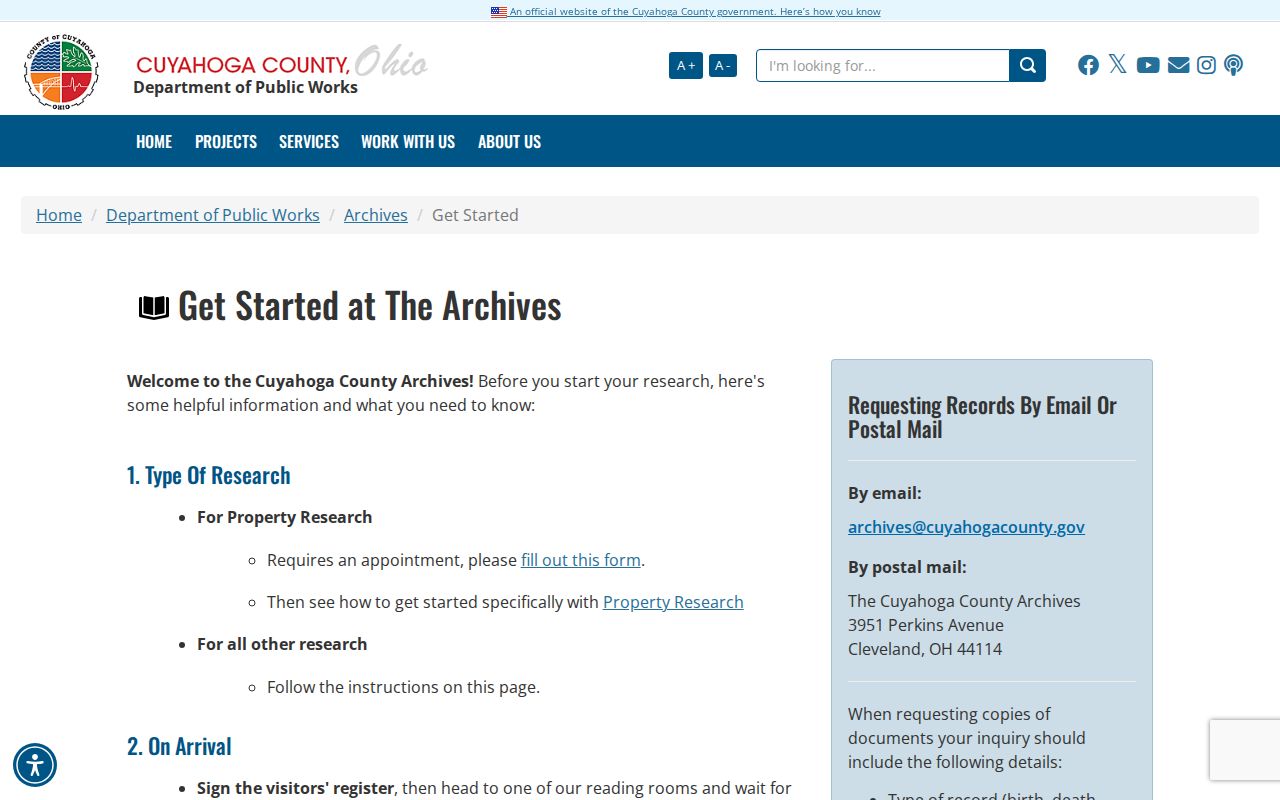
Send separate, organized requests for different record types and dates. Asking whether a named series exists for a surname, address, and period is more useful than assuming a broad Cleveland directory title contains all North Olmsted households.
North Olmsted Families at Frostville
Frostville Museum gives directory research a distinctly local family-history route. The Olmsted Historical Society says its archives preserve family histories, letters, diaries, photographs, newspapers, community collections, local-government items, and a reference library. Its inventory also points to North Olmsted organizations, school materials, maps, architectural plans, and local public-safety material. Those holdings can supply context when a name or address appears briefly in a directory.
The Olmsted Historical Society archives accepts an Archive Research Form and offers research help.
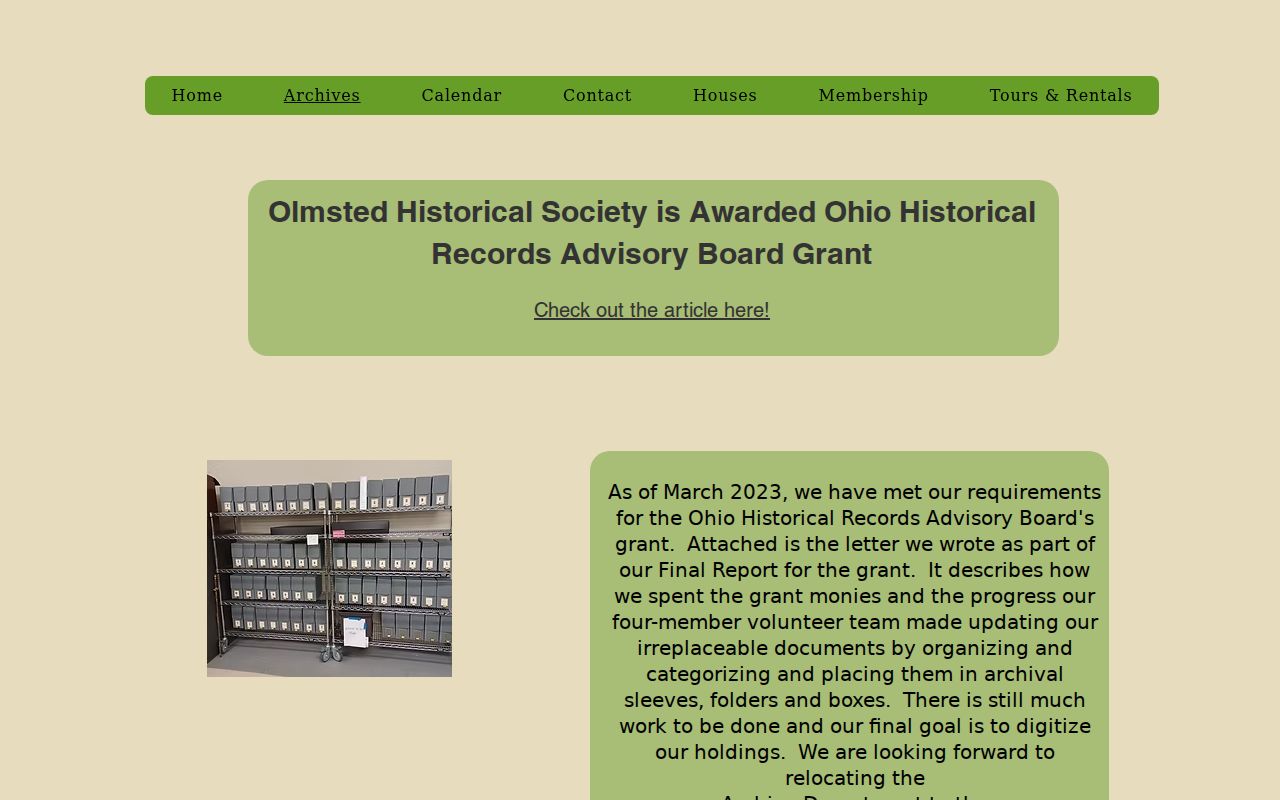
The archive is a request-and-finding-aid route, not a claim that every family file is digitized or searchable from home. Give staff the directory citation, variant name, address, and date range when asking about local material.
Trace North Olmsted Directory Households
Use available directory years as anchors around a household, then test the connection with records that answer a different question. The federal decennial census is public through 1950, so it can show a household near an early directory date without being mistaken for a current record. Deeds and property cards help with address continuity. The full modern address sequence belongs in the North Olmsted street directory research route.
- Start with an exact name or address and transcribe the first verified directory listing, including spelling and page.
- Check the 1953 Orange Line volume, then the confirmed 1962 and 1963 Lakewood issues when the time frame fits.
- Request the relevant West Suburban volume for later years and verify that its issue covers North Olmsted.
- Pair the closest pre- or post-census directory with the census through 1950, noting that the two records capture different dates.
- Use an obituary, probate file, parcel record, or Archives collection to test a disappearance, move, or name change.
A listing that disappears may reflect a move, death, changed spelling, or omission. Mark it as an unresolved change until another record supports the explanation. That restraint is especially important where the available North Olmsted directory years are separated by gaps.
North Olmsted Directory Collection Timeline
The known chronology is a research map, not a continuous publication history. County records reach further back than the local directory shelf, which is why a house or family investigation may move from a directory to deeds, tax cards, or an archive appointment.
- 1953: Orange Line Publishing Co. issued the four-community Fairview Park, Parkview, North Olmsted, Westlake Directory.
- 1962-1963: North Olmsted is confirmed in the documented Lakewood City Directory issues.
- 1964-1980: Cleveland Public Library holds the West Suburban directory run on microfilm; each volume needs a coverage check.
- Through 1950 census release: public federal census images provide a household companion for the earlier directory era.
Note: Cite the volume actually viewed because the local directory sequence contains real gaps and changing geographic scopes.