
North Olmsted Previous Residents by Era
A past North Olmsted household is best traced with the source that fits the date. The county recorder provides a document trail; property cards, tax material, and plat maps add earlier parcel context; the library directory collections and public census add dated household clues. City files can date work on a property, but they do not supply a complete list of past residents. This separation keeps a house timeline honest when the available records have different purposes and gaps.
| Source | Years It Covers | Where Held | What It Shows |
|---|---|---|---|
| Cuyahoga Official Records | County states 1810-present | Online recorder search and Recorder counter | Document parties, dates, and legal-description trail; verify older images and indexing. |
| County Archives tax records | circa 1819-1986 | Cuyahoga County Archives appointment or request | Parcel and valuation context across a long historical span. |
| Real-estate appraisal cards | circa 1935-1970 | Cuyahoga County Archives | Building, address, and assessment context, not a full household record. |
| North Olmsted-related directories | 1953, 1962-1963, and West Suburban 1964-1980 | Cleveland Public Library collections | Dated name and address leads; confirm city coverage in each later West Suburban issue. |
| Federal census | Public through 1950 | CCPL and genealogy research routes | Household information at the census date, paired with an address clue. |
Start with the present parcel when the question is about one lot. Start with a dated directory or census when a family name is known but the street number is uncertain. Neither route should skip the legal description, because it is the durable connection across changing address forms.
Anchor a North Olmsted Parcel
Use Cuyahoga County MyPlace to establish the modern parcel anchor. Choose North Olmsted in the City field and search by address, owner, or parcel. Save the Permanent Parcel Number, legal description, tax district, current transfer detail, and the labels attached to the situs and mailing addresses. The situs is the physical property location. A mailing address is where county correspondence goes, so it is not proof that the named recipient lived at the property.
The parcel card offers General Information, Transfers, Values, Land, Building Information, Building Sketch, Other Improvements, Permits, Property Summary Report, and Tax By Year. Those tabs provide a locator and a chronology clue. MyPlace describes its mapping and analytic display as informational, while the originating office keeps the controlling record. Preserve a record's own labels instead of copying a map label into a family conclusion.
North Olmsted Records Need Parcel Keys
A Permanent Parcel Number, or PPN, is the county identifier for a parcel. A legal description identifies the lot, subdivision, or other land description used in recorded documents. Together, they travel better through time than a street number alone. Cuyahoga County Archives warns that street names, dimensions, and property descriptions change. No official source in the research verified a North Olmsted citywide renumbering, so do not assume one when an older address does not match a modern number.
For an old address, compare the newer deed's subdivision or lot wording with historic plats and property cards. Search that wording or the PPN rather than forcing a present address into an earlier index. The North Olmsted 44070 postal label, city boundary, tax district, school district, precinct, and parcel system are different geographic tools. A legal description is the bridge among the property records, while the postal label only helps deliver mail.
Note: Preserve the PPN and legal description beside every address spelling so later archive work can reconnect the same parcel.
Trace North Olmsted Past Owners
The deed chain begins after MyPlace supplies the parcel anchor. Cuyahoga Official Records Search accepts a grantor or grantee name, subdivision, document type, document number, or parcel ID. Use the present owner as a grantee, narrow by recorded date when needed, and locate the acquisition document. The seller, shown as the grantor in that acquisition, is the immediate prior owner. Then find that prior party's acquisition and repeat the process.
- Open the MyPlace parcel, record the PPN with dashes and copy the legal description exactly.
- Use the current owner, PPN, or legal description in Official Records to locate the acquisition document.
- Record the document number, recorded date, document type, grantee, grantor, and the description carried on the document.
- Use the acquisition deed's grantor and description to find that party's earlier acquisition, then work backward one transfer at a time.
- Pause when the description or subdivision changes, and take the PPN, deeds, and dates to the Recorder or County Archives for verification.
- Grantor
- The person or entity transferring an interest in a recorded document, often the seller in an acquisition deed.
- Grantee
- The person or entity receiving the recorded interest, often the buyer in an acquisition deed.
- Chain of title
- The ordered series of transfers connecting one recorded property interest to an earlier one.
- Legal description
- The lot, subdivision, or land wording that identifies the parcel beyond a current street number.
North Olmsted Old Records Need Verification
The recorder says recorded-document data runs from 1810 to present. That statement makes the official index an unusually deep starting point, but it does not promise that every older document image has the same search behavior or online access. The careful local rule is simple: use the index to find a party, date, document number, parcel, or legal description, then verify older images or details at the Recorder or through Cuyahoga County Archives.
Cuyahoga County Archives property research is the fallback when the online trail becomes difficult. The Archives asks property researchers to begin with the street address or parcel number and offers appointment-based in-person work. Its office preserves tax records, appraisal cards, and maps that can clarify a description no longer apparent in a modern search result.
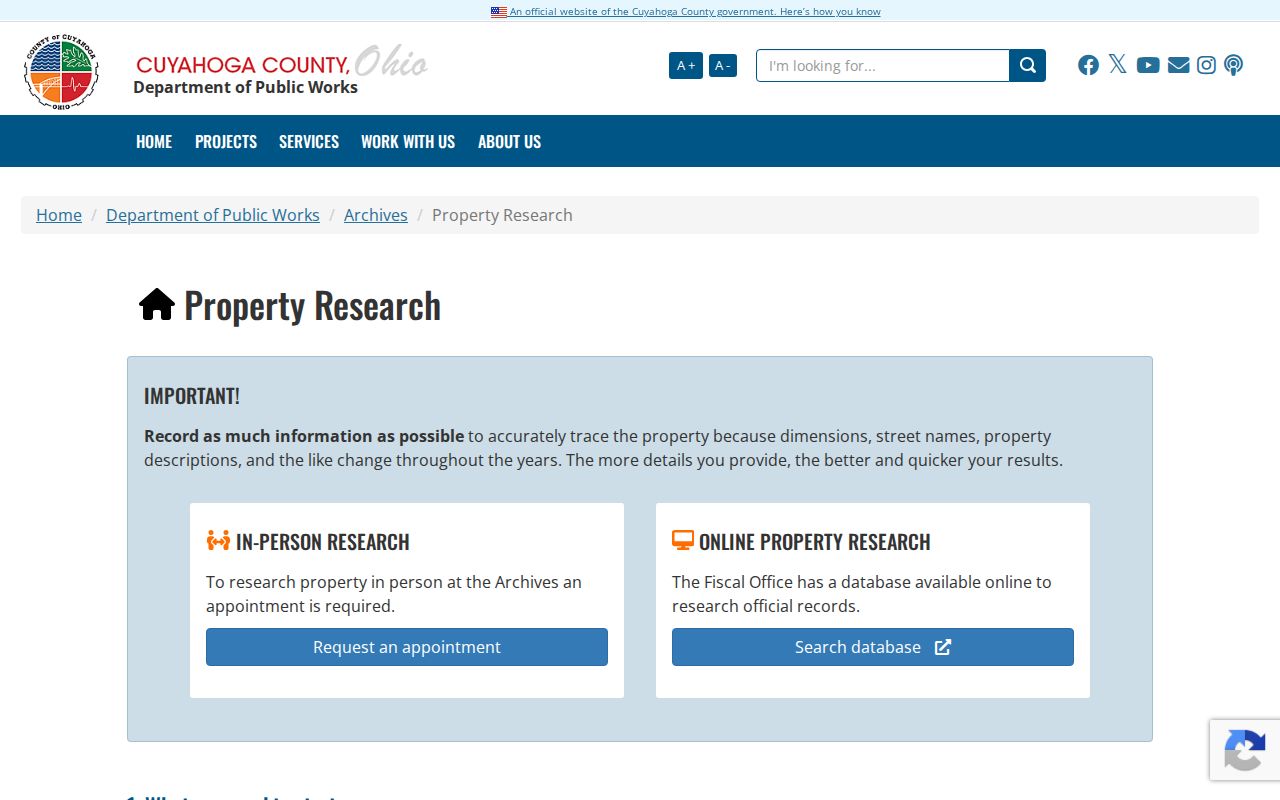
An Archives appointment is especially useful when the goal is parcel continuity rather than a quick name result. Bring a short sequence of deeds and the exact legal wording, not only a current street address.
City Files Frame North Olmsted Past Residents
North Olmsted's Building Department maintains records on most improvements and work, plus property-maintenance history, permits, citations, and inspections. Those files add construction-era context to a previous-residents search. They may identify an owner, contractor, or applicant, but they do not verify who lived at the address. MyPlace has a Permits tab, while the City department is the local authority for its permit, inspection, and citation files.
No public searchable North Olmsted permit database was located. Request a file by street address or PPN, approximate work period, and record type through the Building Department or the City's public-records procedure. The city reports no point-of-sale inspection requirement, so a missing point-of-sale record cannot establish that no work occurred. Use a permit date beside the deed and directory timeline only as property context.
Pair North Olmsted Past Residents
Recorded owners are only one part of a property story. Directories and census images can add a dated household layer, but their coverage is fragmentary. For North Olmsted, use the September 1953 four-community directory, then the confirmed 1962 and 1963 Lakewood entries, then a West Suburban issue whose local coverage is verified. The federal census is publicly released through 1950. It can be paired with the nearest directory date, never used as present-day confirmation.
- Choose a dated parcel transfer or a directory address as the first firm point in the address history.
- Check the closest confirmed North Olmsted directory source and copy the exact printed name, address, and page.
- Pair it with the census year before or after it, noting that a census reflects one enumeration date and may use an older address form.
- Compare the address against the PPN or legal description, then use deeds or property cards to test whether it is the same parcel.
- Use an obituary or Probate Court record as an endpoint clue, then seek the custodian record if a relationship or date needs confirmation.
The underlying collections and their exact volume limits are described in the North Olmsted directory book. A missing directory entry may mean a move, an omission, a spelling variation, or a title that did not cover the city that year.
North Olmsted Archives Fill Address Gaps
The County Archives fills important gap years without pretending to be a single house-history database. Its real-estate appraisal cards cover about 1935 to 1970, tax records about 1819 to 1986, and plat maps about 1890 to 1945. Cleveland City Directories run from 1837 to 1972 but are not inclusive. These records can date a parcel or show its broader regional setting, yet each needs a request for the named record group and time span.
CCPL also offers searchable Sanborn Fire Insurance Maps and genealogy resources. North Olmsted-specific Sanborn sheet years were not verified in the research, so a request should ask staff to check the actual database rather than assume local coverage. For historic homes in the Butternut Ridge Historic District, city materials point researchers toward Recorder and Auditor records, County Archives building cards, maps, landmark files, and title documents.
Lawful North Olmsted House History
A property history should stay focused on family history, local history, estate questions, and the public record held by the responsible office. Some records are limited, sealed, redacted, or intentionally absent. A death record or court-related endpoint has its own access rules, and a result does not remove the need to verify it with the custodian.
Ohio's vital-records law explains controlled access to vital records and the historical-transfer framework.
Vital material can confirm a specific event through its proper channel, but it is not a substitute for the parcel-to-deed chain or for a dated household record.
Ohio Supreme Court's public docket is a separate appellate record source, not a general North Olmsted address index.
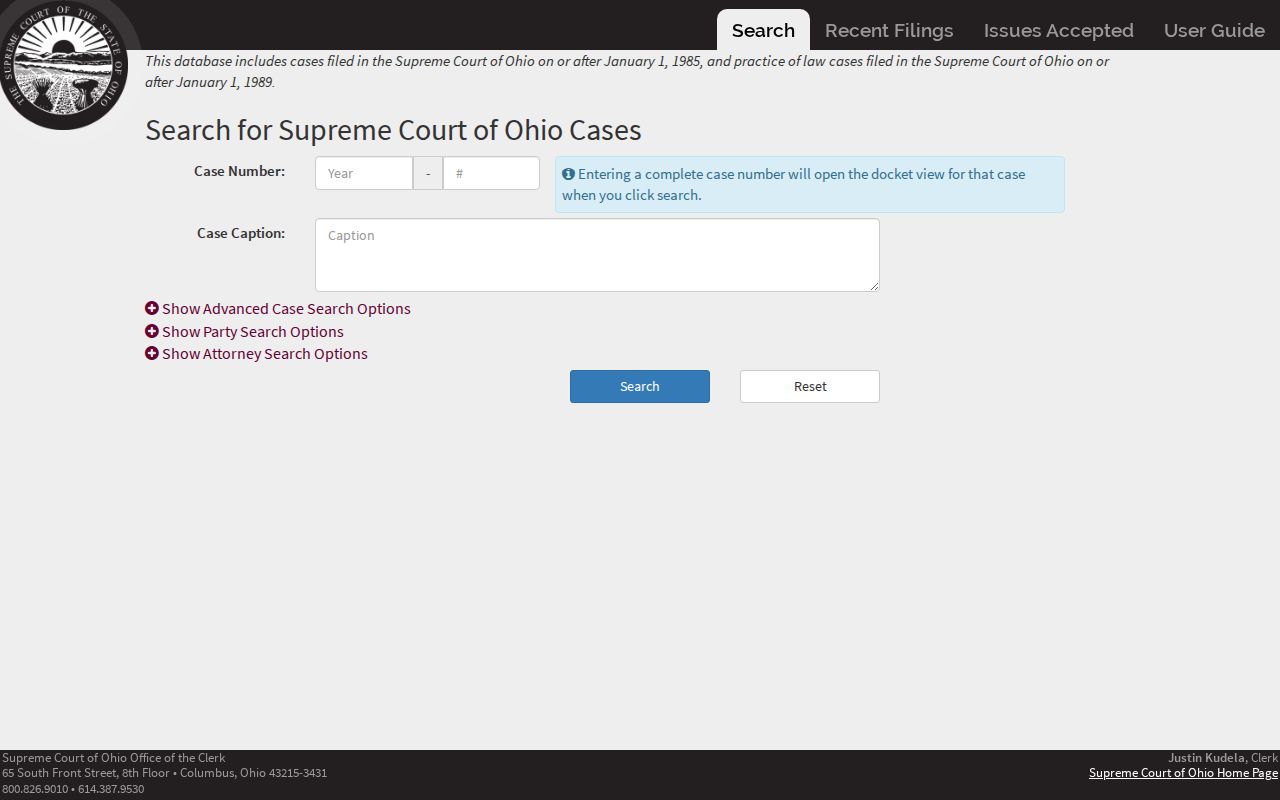
Keep an appellate docket separate from a property timeline unless the record itself connects to the parcel or estate question being researched.
Ohio VINE information is a victim-notification route, not a source for tracing an address history.
Leaving that separate service outside a house-history file respects the difference between public property research and protected personal information.